Product Consultation
Your email address will not be published. Required fields are marked *

Getting the most out of an office chair comes down to three things: sitting in it correctly, choosing the right features for your body and work style, and keeping it clean. Whether you're deciding between a mesh back or leather, arms or no arms, or trying to figure out why your casters are scratching the floor — the answers are more straightforward than most chair guides make them seem.
Content
Poor sitting posture is responsible for a significant share of workplace discomfort. According to the Bureau of Labor Statistics, musculoskeletal disorders account for roughly 30% of all worker injury and illness cases in the U.S. — and much of that stems from sustained awkward postures at a desk. The good news is that the correct way to sit in an office chair is learnable and quickly becomes habit.
Start from the ground up. Your feet should rest flat on the floor — or on a footrest — with no pressure on the underside of your thighs from the seat edge. Adjust seat height so your knees form roughly a 90–110° angle; slightly open is often better than a strict right angle for lower back comfort. Your hips should sit all the way back against the backrest, not perched at the seat's edge.
The lumbar support should make contact with the inward curve of your lower back — typically 6–10 inches above the seat. If your chair's lumbar is adjustable, position it so it gently fills that gap rather than pushing your spine forward. Your upper back should rest lightly against the backrest without slouching or aggressively pressing into it.
Your monitor should be at roughly arm's length away, with the top of the screen at or slightly below eye level. Your shoulders should stay relaxed — not raised or rolled forward. If your chair has armrests, set them so your elbows rest at approximately 90° with shoulders in a neutral, dropped position. Armrests that are too high force the shoulders upward; too low and you'll lean to one side.
| Body Part | Target Position | Common Mistake |
|---|---|---|
| Feet | Flat on floor or footrest | Dangling or tucked under chair |
| Knees | 90–110° angle | Seat too high, knees above hips |
| Lower back | Lumbar support fills inward curve | Gap between back and lumbar support |
| Elbows | ~90°, armrests at desk height | Armrests too high, shoulders raised |
| Monitor | Top at or below eye level, arm's length away | Screen too low, neck bent down |
The debate over office chairs with or without arms is one of the most practical decisions a buyer faces — and it depends more on your work tasks and desk setup than personal preference.
For people who spend the majority of the day reading, writing, or on calls, office chair arms reduce shoulder and neck fatigue by offloading the weight of your arms from your upper trapezius muscles. Research published in ergonomics journals has estimated that armrests can reduce neck and shoulder muscle activity by up to 10–15% during sustained sedentary work. Adjustable armrests — particularly 4D versions that move in, out, forward, backward, and rotate — offer the most benefit because they can be matched precisely to your desk height and task.
Armless chairs are often the better choice for people who work at desks with fixed-height surfaces that don't align well with standard armrest heights — a common problem with standing desks used at sitting height. They're also preferred by users who move frequently between tasks, artists, and anyone working with wide monitors who need a full range of lateral movement. Armless chairs tend to tuck more neatly under desks and work better in tight spaces.
One practical middle ground: chairs with flip-up or removable arms, which give you the option to use armrests when needed and clear them away when they're not.
The two dominant materials for office chair backs and seats — mesh and leather — serve different users in different environments. Neither is universally better; the right choice depends on your climate, work duration, and maintenance tolerance.
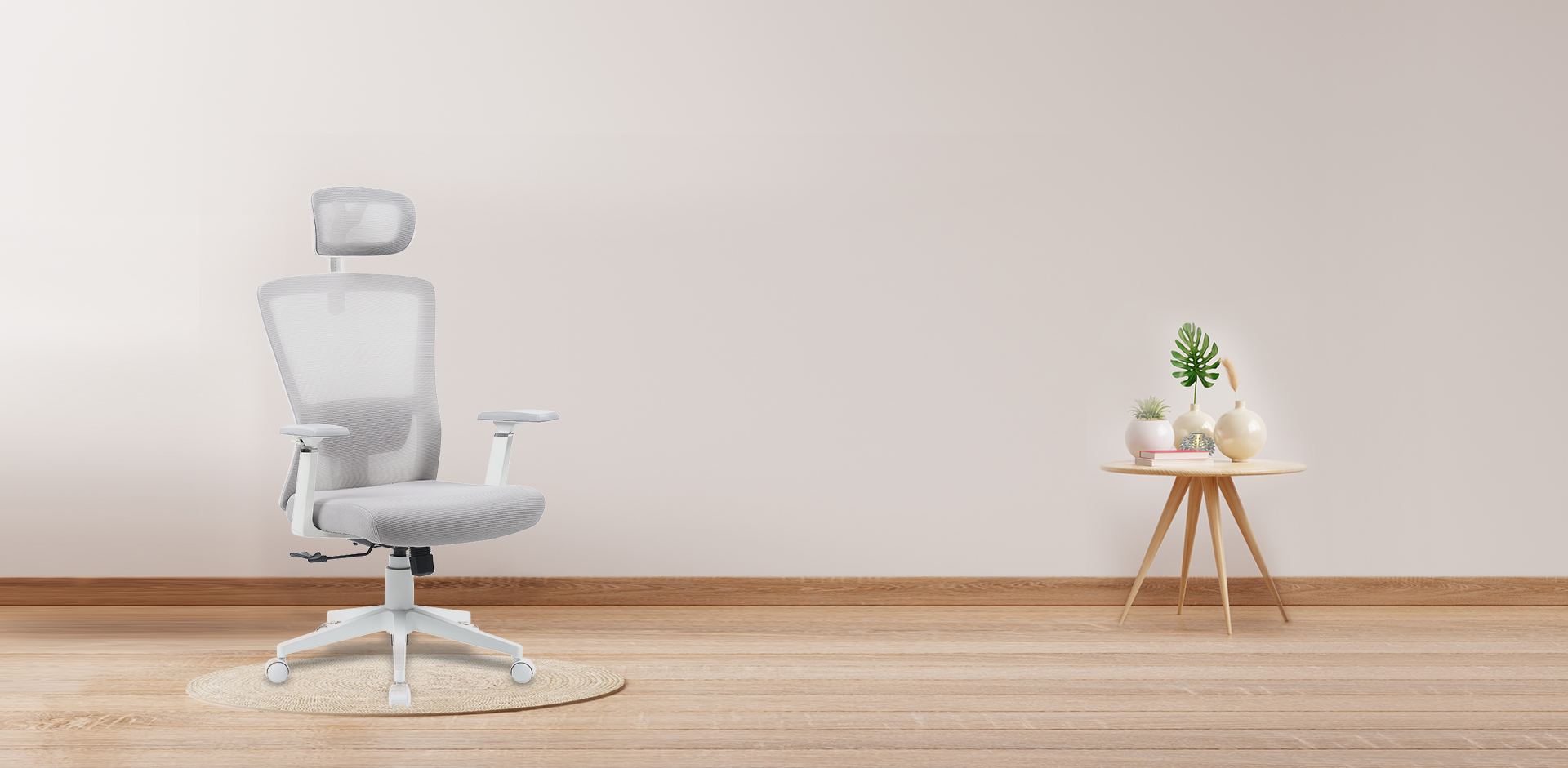
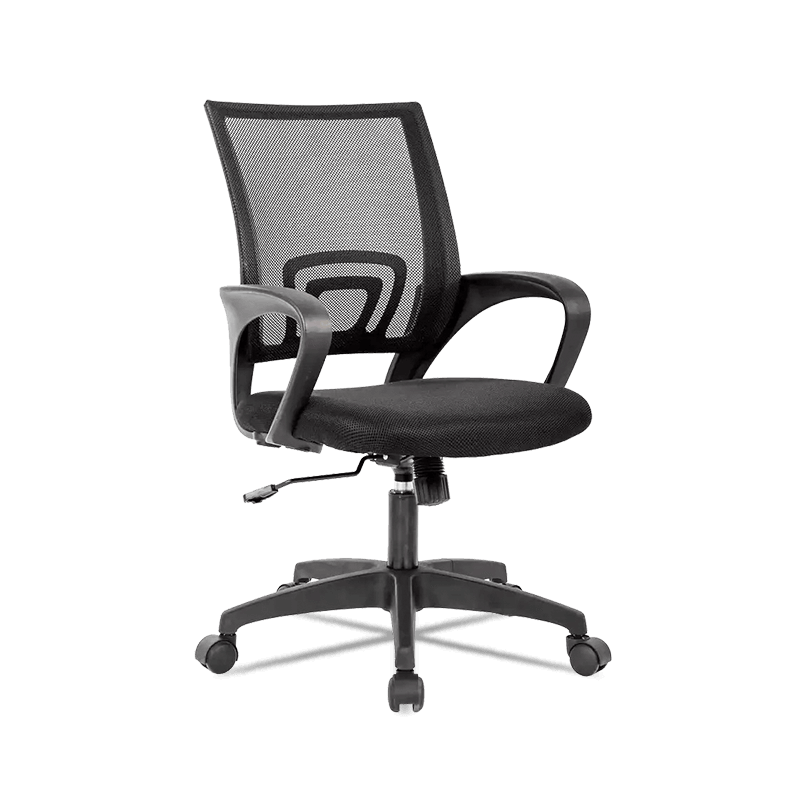
A mesh back office chair — particularly a high back model that supports the full length of the spine including the upper back and shoulders — is the preferred choice for long hours of continuous sitting. The woven mesh allows air to circulate continuously, preventing the heat and moisture buildup that solid upholstery creates. Studies on thermal comfort in seating have found that mesh chairs maintain back skin temperatures 2–4°F lower than foam-backed chairs during extended sitting periods.
High back mesh designs also tend to conform more naturally to the curvature of the spine, especially in chairs using tension-adjustable or adaptive mesh. Brands like Herman Miller (Aeron), Steelcase (Leap), and HM's Mirra pioneered this category, and the technology has since filtered into mid-range chairs from brands like Humanscale and Branch.
Leather office chairs project authority and polish in client-facing settings. They're also more resistant to spills and staining than most mesh or fabric options and, when properly maintained, can last considerably longer than mesh, which can stretch or fray over time. However, genuine leather requires conditioning every 3–6 months to prevent cracking, and full leather seats can become uncomfortable in warm environments without climate control.
| Factor | Mesh High Back | Leather |
|---|---|---|
| Breathability | Excellent | Poor |
| Durability | Good (5–10 yrs) | Excellent (10–20 yrs with care) |
| Maintenance | Easy (mild soap + water) | Moderate (regular conditioning) |
| Comfort (long sessions) | Better (cooler, adaptive) | Varies (warm climates uncomfortable) |
| Aesthetics | Modern, functional | Executive, professional |
| Spill resistance | Low (absorbs liquid) | High (wipes clean) |
Leather is an investment material that rewards consistent, gentle care. Neglecting it leads to cracking, fading, and peeling — particularly on bonded leather, which can delaminate within 3–5 years without proper treatment.
After cleaning, apply a quality leather conditioner every 3–6 months using a soft cloth. Products containing lanolin or beeswax (such as Leather Honey or Chamberlain's Leather Milk) replenish the natural oils lost to daily use and environmental exposure. Apply sparingly, allow it to absorb for 30 minutes, then buff off any excess.
Keep leather chairs away from direct sunlight and heating vents. Prolonged UV exposure fades color and dries out the material significantly faster, even on high-quality full-grain leather.
A mesh back office chair is easier to maintain than leather but requires a different approach because dust, skin cells, and oils accumulate in the weave of the fabric over time.
For a deeper clean, the seat cushion (if removable) can often be spot-cleaned separately or hand-washed depending on the manufacturer's instructions. Check the care label before submerging any foam padding.
The casters on an office chair are among the most overlooked components — until they start damaging floors or rolling poorly. Most chairs ship with standard hard plastic casters designed for carpeted surfaces. On hard floors like hardwood, tile, or laminate, these become a liability.
Office chair rubber casters — also called soft-wheel or polyurethane casters — are the correct choice for hardwood, vinyl, tile, and polished concrete. The softer wheel material grips without scratching and rolls more quietly than hard nylon. Standard caster stems are a near-universal 7/16" diameter and 7/8" long, meaning rubber caster replacements fit most chairs without any tools beyond pulling out the old wheel and pressing in the new one.
A set of five replacement rubber casters typically costs $15–$35 — far less than refinishing scratched hardwood floors. If you're unsure which caster type you have, flip the chair: hard nylon casters look matte grey or black and feel rigid; rubber or polyurethane casters have a slightly softer outer surface and often appear semi-translucent.
Casters accumulate hair, thread, and debris around the axle housing, which eventually locks the wheel and forces the chair to drag rather than roll. This increases floor wear and puts stress on the chair base. Maintenance is simple:
| Caster Type | Best Floor Surface | Floor Safety | Roll Quality |
|---|---|---|---|
| Hard nylon (standard) | Carpet | Scratches hard floors | Good on carpet |
| Rubber / polyurethane | Hardwood, tile, vinyl, LVP | Floor-safe, non-marking | Smooth and quiet |
| Rollerblade-style | Both carpet and hard floors | Floor-safe | Excellent on both surfaces |
| Locking casters | Any (standing desk use) | Varies by wheel material | Lockable for stability |
The best office chair is one configured correctly for how you actually work. A high-end mesh high back chair with adjustable arms means little if the seat height is set wrong or the casters are destroying your floor. Use these guidelines to match features to your situation:
Regardless of material or style, no chair eliminates the need to change positions periodically. Even with perfect posture and the best ergonomic setup, standing or stretching for 5–10 minutes every hour remains one of the most evidence-supported interventions for reducing musculoskeletal discomfort during desk work.
Your email address will not be published. Required fields are marked *

Tangpu, Huzhou, Zhejiang, China
0086-15088380506
Copyright © Anji Mingchuang Furniture Co., Ltd. All Rights Reserved.