 {|get_lang_name}
 {|get_lang_name}
Product Consultation
Your email address will not be published. Required fields are marked *


Choosing between an executive office chair, a home office chair, and a mesh office chair comes down to three factors: how many hours a day you sit, the environment you work in, and what your body needs for support. Executive chairs prioritize status, cushioned comfort, and a commanding aesthetic; mesh office chairs prioritize breathability, adjustability, and long-session ergonomics; and home office chairs occupy a spectrum in between, balancing comfort with space efficiency and design flexibility. For most people working 6–8 hours a day at a desk, a well-adjusted mesh ergonomic chair will outperform a plush executive chair in terms of posture support and all-day comfort — but the right answer depends on your specific use case, budget, and workspace.
Content
An executive office chair is characterized by its tall backrest, wide padded seat, and premium upholstery — typically genuine leather, bonded leather, or high-grade PU leather. These chairs are designed to convey authority and professionalism, making them a fixture in corner offices, boardrooms, and client-facing workspaces. The high back typically extends to shoulder or headrest height, providing full upper-back and neck support for those who recline during calls or meetings.
Key structural features of executive chairs include:
Executive chairs perform best for users who alternate between active desk work and reclined reading or phone calls, as the padded high back provides comfortable support during recline. They also project a polished, professional aesthetic in client-visible offices.
However, the same features that make executive chairs visually impressive create ergonomic limitations. Dense foam padding compresses over time — most foam seat cushions lose 20–30% of their original density within 2–3 years of daily use, creating a "bottoming out" effect that reduces lumbar support. The emphasis on aesthetics also means fewer adjustment points compared to purpose-built ergonomic chairs; many executive chairs lack seat depth adjustment, dynamic lumbar support, or headrest angle control.
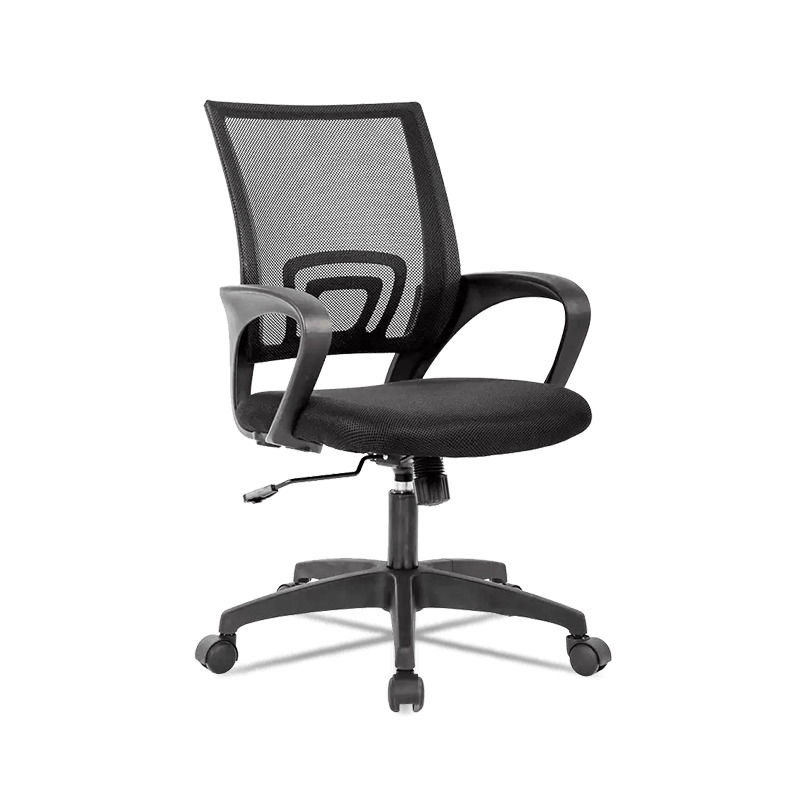
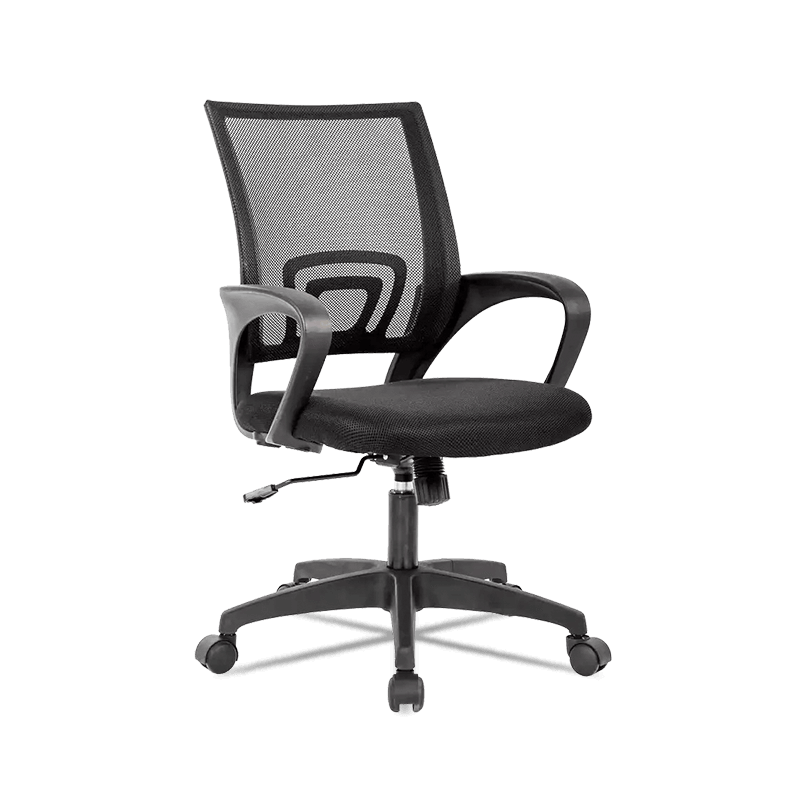
A mesh office chair uses a tensioned fabric mesh stretched across the backrest frame instead of foam and upholstery. This design was popularized by the Herman Miller Aeron in 1994 and has since become the dominant form factor in professional ergonomic seating. The mesh conforms to the shape of the user's back under body weight, providing even pressure distribution without the hard spots created by foam over a rigid shell.
The primary advantage of mesh is thermal management. Human skin temperature rises by approximately 3–5°F (1.5–3°C) when pressed against non-breathable surfaces for extended periods. Foam and leather upholstery trap body heat and moisture, contributing to discomfort and fatigue during long sessions. Mesh allows continuous airflow across the full back surface, maintaining a near-ambient temperature regardless of session length.
Beyond breathability, quality mesh chairs offer a level of adjustability that executive chairs rarely match:
Unlike foam, mesh does not compress or degrade in the same way. High-quality mesh fabrics — such as the 8Z Pellicle in the Herman Miller Aeron or the Syncra mesh in Steelcase chairs — are rated for 10–12 years of daily use without significant degradation in tension or support. Entry-level mesh chairs using lower-grade fabrics may sag within 2–4 years, so mesh quality is a critical purchase factor. Look for mesh described as "elastomeric" or "high-tension" rather than standard woven fabric.
The home office chair category is broad — it encompasses everything from compact task chairs to mid-back ergonomic chairs to hybrid designs that blur the line between desk chair and accent furniture. The defining consideration for home office chairs is that they must perform functionally during work hours while fitting aesthetically into a living space that serves multiple purposes.
Commercial office chairs are engineered for the worst-case scenario: multiple users of varying sizes, sitting for 8+ hours a day, 5 days a week. Home office chairs are typically single-user and may be used for shorter or more variable sessions. This allows for some relaxation of commercial-grade durability requirements, but it also means some home office chairs are under-engineered for users who work full professional hours from home.
Remote workers logging 6 or more hours per day at a desk are effectively full-time office workers and should treat chair selection accordingly. A budget home office chair priced under $150 is unlikely to provide adequate lumbar support, adjustability, or durability for sustained professional use. Studies on musculoskeletal health consistently show that inadequate lumbar support during prolonged sitting increases the risk of lower back pain — a condition affecting approximately 65% of office workers at some point in their careers. Investing in a proper ergonomic chair is a health investment, not just a comfort upgrade.
The table below summarizes how each chair type performs across the criteria that matter most to buyers:
| Criteria | Executive Office Chair | Mesh Office Chair | Home Office Chair |
|---|---|---|---|
| All-day ergonomics | Moderate | Excellent | Varies (Good–Poor) |
| Breathability | Poor (leather/foam) | Excellent | Moderate (fabric) |
| Adjustability | Basic (height, tilt) | Extensive (4D+) | Moderate |
| Professional aesthetic | Excellent | Good (corporate) | Varies widely |
| Home décor compatibility | Low | Moderate | High |
| Durability / lifespan | 5–8 years (foam degrades) | 10–15 years | 3–7 years |
| Typical price range | $200–$1,500+ | $150–$1,800+ | $80–$600 |
| Best for | Client-facing offices, mixed-task use | Full-time desk workers, hot environments | Part-time WFH, multi-use rooms |
Marketing language around office chairs is dense with terms like "ergonomic design" and "lumbar support" that are applied to chairs ranging from genuinely engineered products to basic foam seats with a decorative lumbar bump. Knowing which adjustments produce real postural benefit helps cut through the noise.
The single most important adjustment on any chair. Correct seat height places the thighs parallel to the floor, feet flat on the ground, and knees at approximately 90 degrees. Most chairs offer a height range of 17–21 inches from floor to seat surface. Taller users (6'2" and above) or shorter users (under 5'4") should verify the adjustment range before purchasing, as standard pneumatic cylinders may not accommodate the extremes of the height spectrum.
Effective lumbar support must target the inward curve of the lower spine (lumbar lordosis), typically located 6–10 inches above the seat surface depending on torso length. Fixed lumbar bumps built into a backrest shell address only one position and will miss the lumbar curve entirely for users outside a narrow height range. Adjustable lumbar supports that move vertically and vary in depth are demonstrably more effective at reducing lower back muscle fatigue during extended sitting.
Arms that are too high force shoulders into elevation, contributing to neck and trapezius tension. Arms set too low cause leaning and lateral spinal loading. The correct position has the elbows at 90–110 degrees with the forearms resting lightly — not bearing weight, just providing orientation. Width-adjustable armrests are particularly important for users who type with a narrow hand placement or who are broader across the shoulders than a standard chair design assumes.
A seat that is too deep forces users to either slide forward (losing lumbar support contact) or press the back of the knees against the seat edge (restricting circulation). The ideal gap between the front edge of the seat and the back of the knee is 2–3 fingers wide. Seat depth adjustment — available on most mesh ergonomic chairs but absent on most executive chairs — allows the seat pan to slide 1.5–3 inches forward or back to accommodate this measurement across a wide range of leg lengths.
If an executive chair is the right fit for your office aesthetic and use case, several quality indicators separate well-engineered premium chairs from those that are premium in appearance only.
The mesh office chair market spans an enormous price range, and performance differences between tiers are real and meaningful. Here's how the tiers break down:
Chairs like the HON Ignition and Staples Hyken offer usable mesh back support and basic adjustability (height, tilt tension, fixed or 2D armrests). Mesh quality is functional but will show sagging within 3–5 years. Adequate for part-time home office use or secondary workstations. Lumbar support, if present, is typically a fixed plastic bump rather than adjustable.
This tier includes the Sihoo Doro C300, Flexispot OC10, and Branch Ergonomic Chair — chairs that offer genuine adjustable lumbar systems, seat depth control, and 3D or 4D armrests. This is the most cost-effective tier for full-time remote workers, providing 80–90% of the ergonomic benefit of premium chairs at 25–35% of the cost. Most mid-range mesh chairs carry 3–5 year warranties.
The Herman Miller Aeron ($1,445), Steelcase Leap ($1,475), and Humanscale Freedom ($1,195) define this tier. These chairs use proprietary mesh technologies, advanced weight-sensitive recline mechanisms, and extensive fit customization including size variants (Aeron comes in sizes A, B, and C for different body dimensions). They carry 12-year warranties and are engineered to remain supportive through a decade of full-time professional use. For chronic back pain sufferers or users spending 8+ hours daily at a desk, the investment is often clinically justified.
A $1,500 chair poorly adjusted provides less benefit than a $300 chair set up correctly. The setup sequence below applies to executive, mesh, and home office chairs alike:
Even after optimal setup, no chair eliminates the need to change position periodically. Ergonomists recommend breaking from a seated posture for at least 5 minutes per hour — standing, walking, or stretching — regardless of how well-adjusted the chair is.
Matching the chair type to your actual work situation produces better outcomes than chasing brand names or aesthetics alone:
Regardless of chair type, prioritizing adjustability over aesthetics and verifying BIFMA certification or a meaningful warranty period will eliminate most poor purchasing decisions across all three categories.
Office Chair Guide: Posture, Mesh, Leather & Caster Wheels
Mar 05,2026Best Office Chair for Women: Ergonomic Buying Guide
Mar 16,2026Your email address will not be published. Required fields are marked *
Copyright © Anji Mingchuang Furniture Co., Ltd. All Rights Reserved.
