 {|get_lang_name}
 {|get_lang_name}
Product Consultation
Your email address will not be published. Required fields are marked *


Content
The average office professional spends between six and nine hours per day seated at a desk. Over the course of a working year, that accumulates to well over 1,500 hours in a chair. At that volume of use, the difference between a poorly designed seat and a well-engineered office chair is not measured in comfort alone — it shows up in spinal health, afternoon concentration levels, and long-term musculoskeletal condition. Lower back pain is the leading cause of work-related disability globally, and a significant proportion of cases are directly linked to inadequate seating posture over extended periods.
This is precisely the context in which the executive office chair has evolved from a status symbol into a functional necessity. Where earlier generations of high-backed leather chairs prioritized appearance over ergonomic substance, today's leading executive office chair designs integrate lumbar support curves, adjustable seat depth, and posture-correcting mechanisms that meet the same functional standards as dedicated ergonomic task chairs — while maintaining the visual authority expected of senior workspaces. Understanding what separates a genuinely supportive chair from one that merely looks the part is the most important step in making the right investment.
Every structural element of a well-designed executive office chair serves a specific biomechanical purpose. Knowing what each component contributes helps you evaluate whether a chair's specifications actually address your physical needs or simply look impressive in a product photograph.
The backrest is the most consequential component of any office chair intended for long-duration use. A properly designed backrest follows the natural S-curve of the spine, maintaining the lumbar lordosis — the inward curve of the lower back — that tends to flatten and collapse during prolonged sitting. A curved backrest on an executive office chair that actively supports this lumbar zone reduces compressive load on the intervertebral discs, which is the primary mechanism behind the lower back pain that affects so many desk workers. The curve must be positioned at the correct height — typically between 7 and 12 centimeters above the seat surface — to align with the lumbar vertebrae of the majority of seated users. Models with height-adjustable lumbar support extend this fit to a wider range of body types.
Thick padding on both the seat and backrest contributes directly to seated comfort over extended hours, but padding density matters more than thickness alone. High-density foam — typically rated above 40 kg/m³ — maintains its shape under sustained body weight without bottoming out, preserving the support geometry the chair was designed to deliver. Lower-density foam compresses significantly after a few months of daily use, creating the illusion of a well-padded seat that no longer provides the pressure distribution it once did. An executive office chair with thick, high-density padding in both the seat pan and backrest will deliver consistent comfort across a working day and retain that performance over years of intensive use.
Armrests are frequently overlooked but play a significant role in reducing shoulder and neck tension during desk work. When armrests are set at the correct height — elbows at approximately 90 degrees with shoulders relaxed — they offload a portion of the upper limb weight from the shoulder girdle, reducing the sustained muscle activation that causes trapezius fatigue and tension headaches over a long workday. Width-adjustable armrests that can be positioned close to the body are particularly valuable, as they allow the arms to rest in a neutral position regardless of shoulder width.
The concept of the fauteuil de direction ergonomique — the ergonomic executive chair in the French professional furniture tradition — captures an important distinction that English-language product categories sometimes blur. In European professional contexts, a fauteuil de direction is not merely a large, upholstered chair placed behind a desk. It is a category that combines the status and aesthetic of executive furniture with the measurable ergonomic performance required for sustained daily use by senior professionals. The EN 1335 standard, which governs office seating across the European market, sets minimum requirements for seat height range, backrest height, lumbar support positioning, and armrest geometry that apply equally to executive and task chairs.
A fauteuil de direction ergonomique that meets EN 1335 criteria will typically offer a seat height range spanning at least 42 to 51 centimeters, a backrest that extends at least 36 centimeters above the seat surface, and a mechanism that allows the backrest to recline under adjustable resistance. These specifications ensure that the chair can be properly fitted to the individual user's body dimensions — a prerequisite for preventing the postural deviation that causes pain and fatigue during extended sitting sessions. When evaluating any executive office chair for a professional environment, verifying compliance with EN 1335 or the equivalent BIFMA standards used in North American markets provides an objective basis for comparison beyond visual appearance or brand reputation.
| Feature | EN 1335 Minimum | Premium Ergonomic Standard |
|---|---|---|
| Seat height range | 42–51 cm | 40–54 cm |
| Backrest height above seat | ≥ 36 cm | 50–70 cm (high-back) |
| Lumbar support adjustment | Fixed curve | Height + depth adjustable |
| Armrest adjustability | Height only | 4D (height, width, depth, angle) |
| Recline mechanism | Basic tilt | Synchronous with tension control |
| Seat depth adjustment | Not required | 40–50 mm slide range |
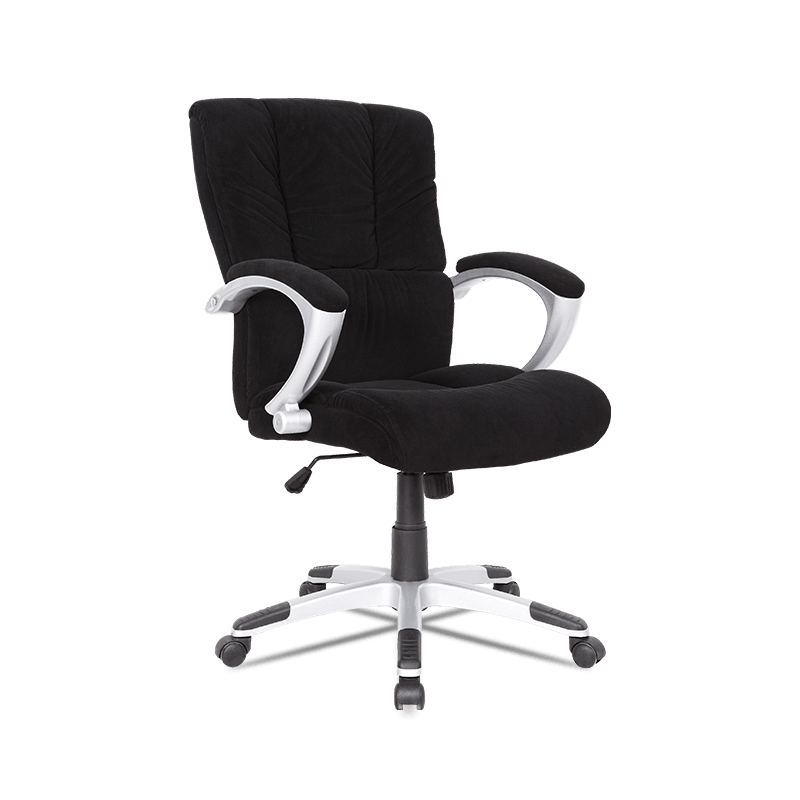
The market for executive seating spans an enormous price and quality range. A structured evaluation approach based on functional criteria rather than brand prestige or visual appeal produces consistently better purchasing decisions, whether for a single chair or a bulk procurement for an entire executive floor.
The single most important specification to match is the chair's rated usage duration against your actual working pattern. Office chairs are typically rated for standard use (up to six hours per day), intensive use (six to ten hours), or continuous use (24-hour environments). An executive who works eight or nine hours at their desk requires a chair rated for intensive use — the mechanisms, foam density, and structural materials are engineered to withstand significantly more cumulative load than a chair rated for half that duration. Using a standard-rated chair in an intensive-use scenario accelerates mechanical wear, foam compression, and ultimately comfort degradation within the first year of ownership.
Most standard office chairs are designed for users between 160 and 185 centimeters in height and carry a weight capacity of 110 to 120 kilograms. Users outside these parameters — whether taller, shorter, or heavier — require chairs with specifications matched to their dimensions. Seat depth is particularly critical for taller users: insufficient depth creates a pressure point at the back of the knees that restricts circulation and causes discomfort within an hour. A seat depth adjustment of 40 to 50 millimeters accommodates a much wider range of leg lengths without requiring the user to sit away from the backrest, which defeats the lumbar support entirely.
The tilting mechanism determines how the chair responds to body movement during the working day. A synchronous mechanism — where the seat and backrest recline together at a coordinated ratio — maintains the correct hip angle during recline, keeping the pelvis from tilting backward and collapsing lumbar support. A basic tilt mechanism, by contrast, rotates from a fixed pivot point beneath the seat, which can create hip extension and lower back strain when the user reclines. For an executive office chair intended for intensive daily use, a synchronous mechanism with adjustable tension resistance is the functional baseline, not an optional upgrade.
An executive office chair occupies a prominent position in the workspace and contributes to the overall aesthetic impression the office makes on visitors, clients, and team members. The material selection for seat and backrest upholstery therefore involves balancing durability, maintenance requirements, thermal comfort, and visual authority — criteria that point in different directions depending on the specific work environment.
The base material — typically aluminum or reinforced nylon — also contributes to both the visual finish and the structural longevity of the chair. Polished aluminum bases carry a premium appearance and offer higher weight capacity ratings, while high-grade nylon bases provide adequate strength for standard use at a lower manufacturing cost. For an office chair placed in a client-facing environment, the visual distinction between these two base types is immediately apparent and worth factoring into the overall investment calculation.
Even the most precisely engineered executive office chair delivers suboptimal results if it is not set up to fit the individual user's body. A five-minute adjustment process at the beginning of ownership — and brief rechecks whenever a different person uses the chair — establishes the postural foundation that makes long-session comfort possible.
An office chair that is correctly adjusted for the user's body transforms a long working day from a physical endurance exercise into a sustainably comfortable experience. The investment in a well-specified executive office chair pays its return not in the first few weeks of use but across the years of consistent, productive, pain-free work it enables — which is ultimately the measure that matters most for any professional spending the majority of their working hours at a desk.
Living Room & Bedroom Armchair Buying Guide
Apr 17,2026Gaming Chair for Home or Office: Full Guide
Apr 29,2026Your email address will not be published. Required fields are marked *
Copyright © Anji Mingchuang Furniture Co., Ltd. All Rights Reserved.
