 {|get_lang_name}
 {|get_lang_name}

Product Consultation
Your email address will not be published. Required fields are marked *


A procurement manager opens a container of 400 task chairs and gets the same complaint from three tenants: the armrests sit roughly 20 mm too high for the fitted desks, and the seat pan tops out at 430 mm. Nothing is broken. The chairs are simply the wrong dimensions for the rooms they were specified into. Ergonomic workstation design is a dimensional and procurement problem long before it becomes a comfort conversation, and that order of operations matters most to anyone buying seating in volume.
The conclusion first: fix desk and monitor geometry, then chair adjustment range, then materials and finish. A chair whose seat-height range actually covers the desk height will outperform a more expensive chair that does not — in every fit-out, at every price point.
Content
Desk height is the anchor point. Fixed office desks sit at 720–750 mm, while sit-stand desks travel from roughly 620 mm to 1,280 mm. A chair is only ergonomic in relation to the surface beside it, so a wholesale spec sheet should state the desk height range before it names chair models. Once that number is fixed, four chair dimensions do the real work.
380–520 mm for task seating. Feet flat, thighs close to parallel with the floor, no pressure line behind the knee.
400–480 mm, leaving 50–75 mm between the seat edge and the back of the knee. Short users need a sliding pan more than a thicker cushion.
200–250 mm above the seat, elbows near 90° with relaxed shoulders. Flip-up arms suit desks with shallow aprons.
150–250 mm above the seat surface. Height-adjustable lumbar is the single most useful feature in the value tier.
EN 1335 and BIFMA X5.1 cover stability, strength and durability. Neither certifies comfort, and neither tells a buyer whether a chair suits a 1,550 mm or a 1,900 mm user. In bulk orders the adjustment range and the tolerance matter more than the label: a ±10 mm drift in gas-lift height across a batch is felt first by the shortest and tallest people in the room. Chairs built around lumbar support seating geometry usually publish a lumbar apex range, which is a far more useful number than a single word like "ergonomic" on a catalogue page.
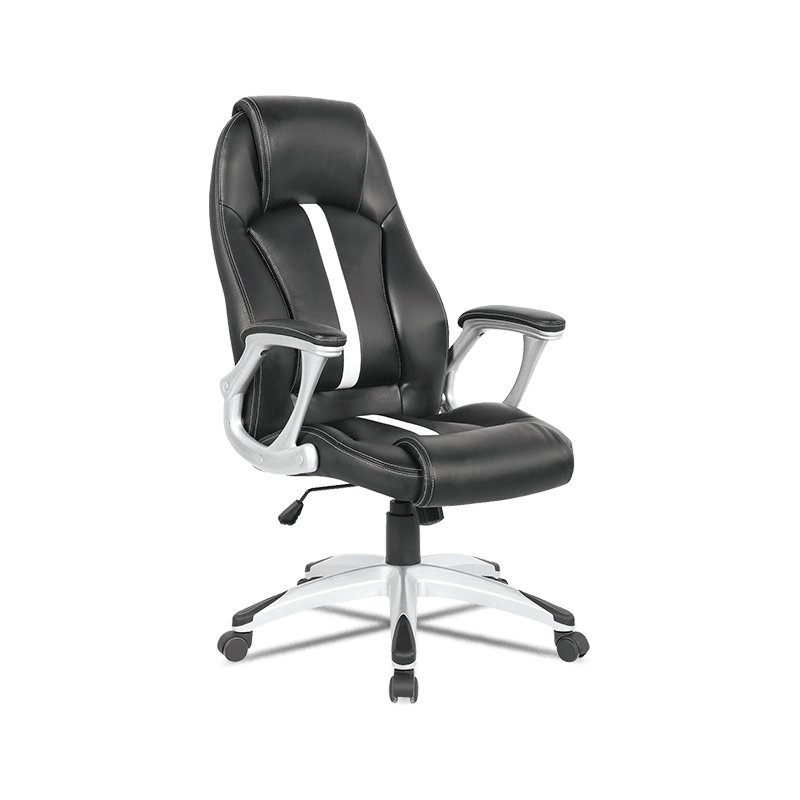 MC-7109 High-Back Executive Chair with Lumbar SupportHigh-back executive chair with lumbar cushion, pneumatic height adjustment and reclining backrest; useful when comparing adjustment ranges and lumbar geometry in mixed chair tenders.View Product →
Tenders frequently mix several chair types in one order, which makes category confusion a real procurement risk. The comparison below condenses typical published ranges; treat the figures as starting filters and request the dimension drawing or test report for the specific SKU before signing.
The practical rule: match the adjustment band to the desk population, not to the average user. A mesh chair with a 400–520 mm gas lift and a sliding seat pan covers far more of a mixed workforce than a plusher fixed-depth chair, which is why mesh platforms such as the MC7802 series remain a default for high-density floors.
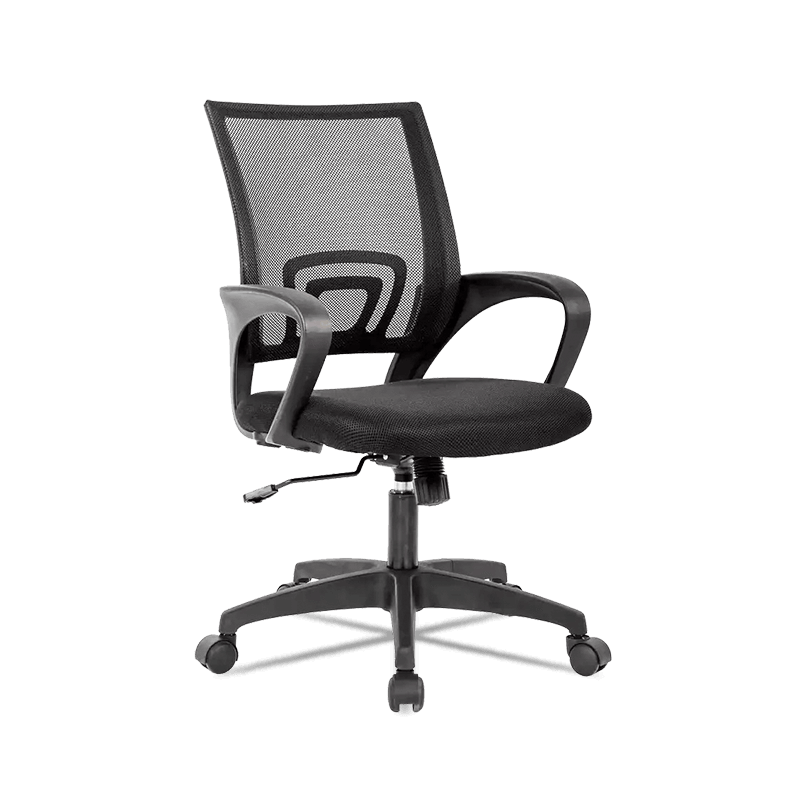 MC-7802 Mid-Back Mesh Office Chair with Lumbar SupportMid-back mesh chair with adjustable height and lumbar support; a practical reference for matching adjustment bands to mixed desk populations on high-density floors.View Product →
Spec sheets sell the first week; complaint records decide the renewal order. Across service and warranty feedback from office and home-office deployments, a small number of spec items absorb most long-term dissatisfaction — and several of them are invisible in a showroom.
The pattern repeats: cushion and lumbar issues dominate, and both are cheap to correct at the design stage — a denser molded foam with a contoured waterfall edge, or a lumbar pad with 50 mm of vertical travel. Armrest complaints cluster around desks with shallow aprons, where a fixed arm cannot slide under the work surface. Buyers who compare quotes on foam density, lumbar travel and armrest type rather than on the word "ergonomic" generally report fewer returns and fewer replacement requests inside the warranty window.
Volume demand is no longer concentrated in corporate fit-outs. Home-office buyers now order in quantities that resemble small-office accounts, and gaming seating has quietly entered ordinary offices — the recline range and headrest that once served players now serve anyone working late. The distribution below reflects typical wholesale order mix by end use.
Each segment changes the specification. Education orders prioritise wipe-clean surfaces and caster braking; hospitality orders need compact footprints and stain-resistant upholstery; home-office programmes live or die on carton size and self-assembly clarity. Gaming-derived models with 3D or 4D armrests and molded foam backrests are increasingly specified in hybrid offices, because the same adjustment set covers both concentrated sessions and general desk work.
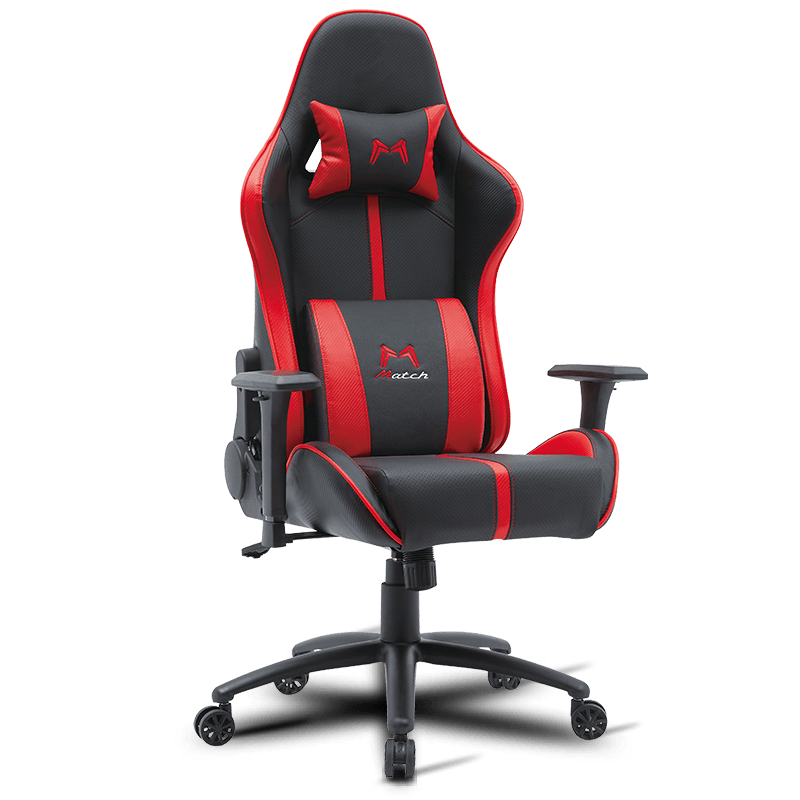
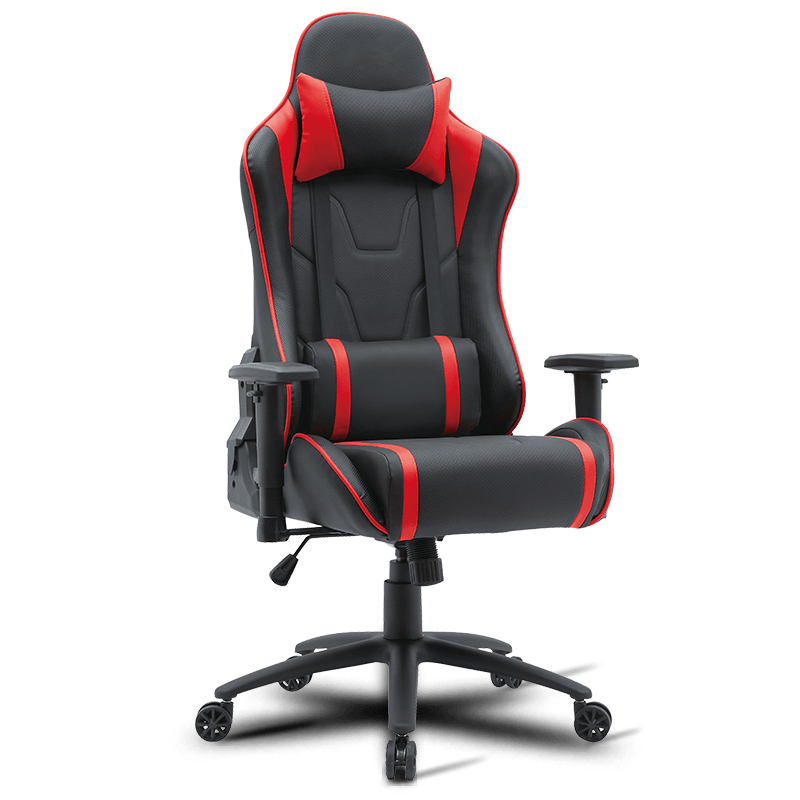
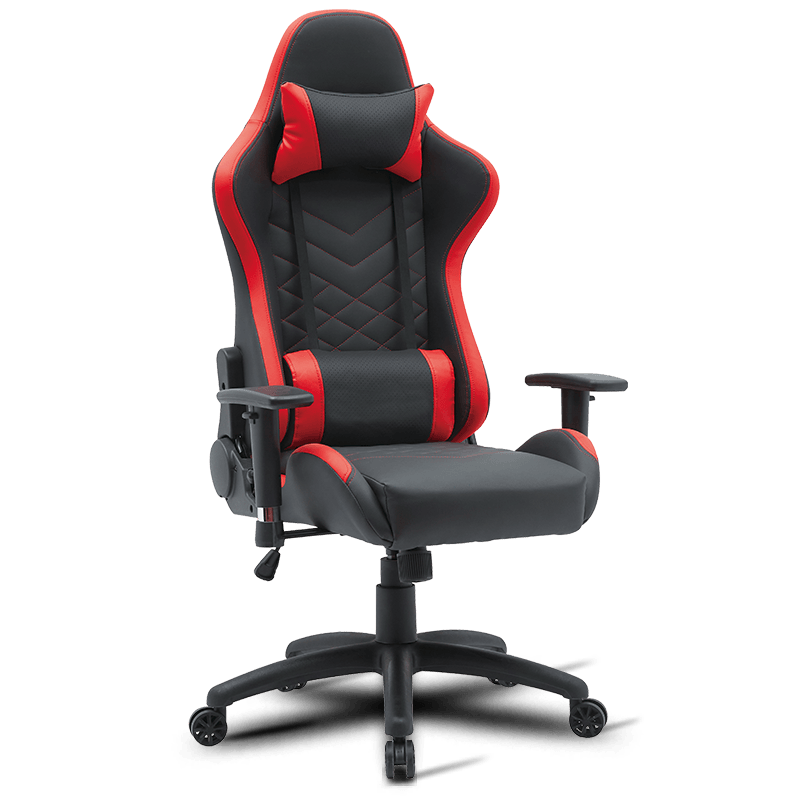
 MC-9103 Gaming Chair with 3D Armrests and Moulded FoamGaming chair with 3D adjustable armrests, moulded foam backrest and lumbar support; suited to hybrid offices needing one adjustment set for varied desk work.View Product →
Five steps keep an ergonomic workstation order from turning into a claims exercise.
Record desk height, apron depth and monitor position for each site. Without these numbers, any chair recommendation is guesswork.
Specify a seat-height range that brackets the 5th to 95th percentile of the actual user group, not the average user.
Choose flip-up or height-adjustable arms wherever apron clearance is under 150 mm.
Use a tape, not the catalogue: check gas-lift travel, foam hardness and lumbar travel on the actual unit.
Name foam density, caster type, lumbar travel and the durability test reference so the specification survives re-quoting.
Ergonomic performance degrades quietly. A gas lift that loses 15 mm of height in eighteen months, or a mesh back that slackens at the lumbar curve, undoes the original specification without any visible failure. Maintenance planning is therefore part of the design brief, not an afterthought.
Compliance itself is mostly documentation: stability and durability test reports, material declarations, and clear statements about what the certificate does and does not cover. Buyers who need a deeper grounding in the numbers behind seat geometry can review the anthropometric basis of chair dimensions before writing the next tender. Get those figures into the purchase order and the workstation will keep working long after the opening inspection.
neck going forward: Applications, Selection Criteria, and Practical Guidance
Nov 09,2026Your email address will not be published. Required fields are marked *
Copyright © Anji Mingchuang Furniture Co., Ltd. All Rights Reserved.
