 {|get_lang_name}
 {|get_lang_name}
Product Consultation
Your email address will not be published. Required fields are marked *


When someone says, “my butt hurts after sitting,” the first useful question is not “which cushion is softest?” It is “where is the load going?” A chair that puts pressure under the sit bones, blocks the thighs, or lets the pelvis roll backward can turn a normal workday into discomfort. The right fix starts with seat geometry and support, then moves to habits and, if needed, clinical review.
Bottom line: for most sitting-related buttock discomfort, choose a chair with a seat height range around 45–50 cm, seat depth around 40–45 cm, a slightly sloping seat pan, adjustable lumbar support, and either firm load-bearing foam or well-tensioned mesh. Fix the chair before adding a thick cushion; a soft topper can feel better for ten minutes and make pressure worse over an hour.
This is not medical advice. Sharp, one-sided, numbing, bleeding, or worsening pain needs a clinician. But when the pattern is “sore after sitting, better after standing,” chair fit is a practical variable to test.
Content
Pressure under the buttocks is a load-distribution problem. The ischial tuberosities, the two sit bones, are designed to carry load. They tolerate pressure best when the pelvis is upright, the feet are supported, and the seat surface lets the thighs share some contact without compressing the underside of the thigh.
Leave 2–3 fingers between the back of the knee and the seat edge. Too deep and the user slides forward; too short and the thigh is unsupported.
Feet should rest flat with knees near 90°. If the chair is too high, the thighs take edge pressure; too low, the pelvis tucks and the lower back rounds.
Support belongs in the lower-back curve, not only at the belt line. A pad that pushes the user forward can increase sit-bone pressure.
Mesh reduces heat and shear, but only with firm tension. Soft foam can bottom out and concentrate load at the sit bones.
For buyers, the useful specification is not “ergonomic” on a label. It is a measurable combination: adjustable seat height, adjustable lumbar height or depth, a seat edge that does not cut into the thigh, and a back angle that lets the pelvis stay neutral rather than slumped.
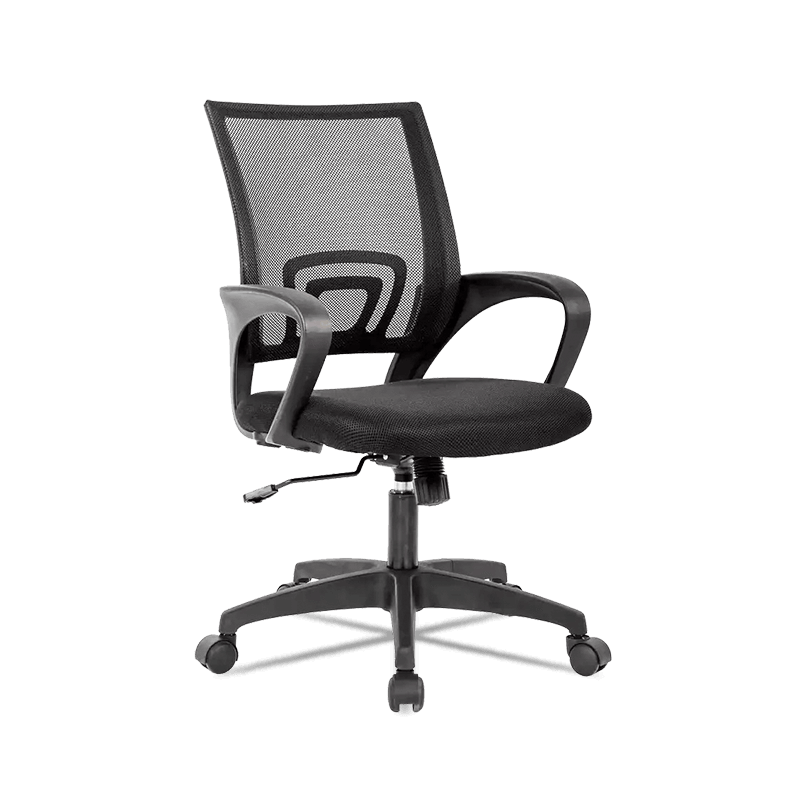 MC-7802 Mid-Back Mesh Office Chair with Lumbar SupportA space-saving mid-back mesh chair with adjustable height, lumbar support, swivel casters and a nylon base for computer desk use.View Product →
The comparison below is a practical field guide, not a clinical trial. It helps separate a chair that merely feels soft from one that distributes load over time.
Caption: a practical comparison of common seating setups and their likely pressure behavior during prolonged sitting.
In real use, the biggest driver is rarely one feature. It is the combination of seat depth, foot support, and postural drift. The chart below is an illustrative risk index for common setup errors, not a clinical score.
Deep seat 84
No lumbar 78
Feet unsupported 72
Soft foam 66
Fitted setup 26
Caption: illustrative risk index based on common ergonomic fit failures; lower is better.
Sitting discomfort is not limited to office workers. Long gaming sessions, home-office desks, and dining chairs used for hours all create different load patterns.
Office and task seating: 38%
Gaming and long-session seating: 24%
Home office and study: 21%
Dining and living room: 11%
Other and mixed use: 6%
Caption: illustrative distribution of prolonged-sitting exposure by chair category; not market research.
Use a five-step check before blaming the user’s posture. The goal is to make the chair fit the body, then let posture habits follow.
For volume buyers, ask for adjustable seat depth or a seat slider, a breathable back, replaceable casters, and a foam or mesh specification that will not collapse under long shifts. A chair that tests well for ten minutes may fail a full workday.
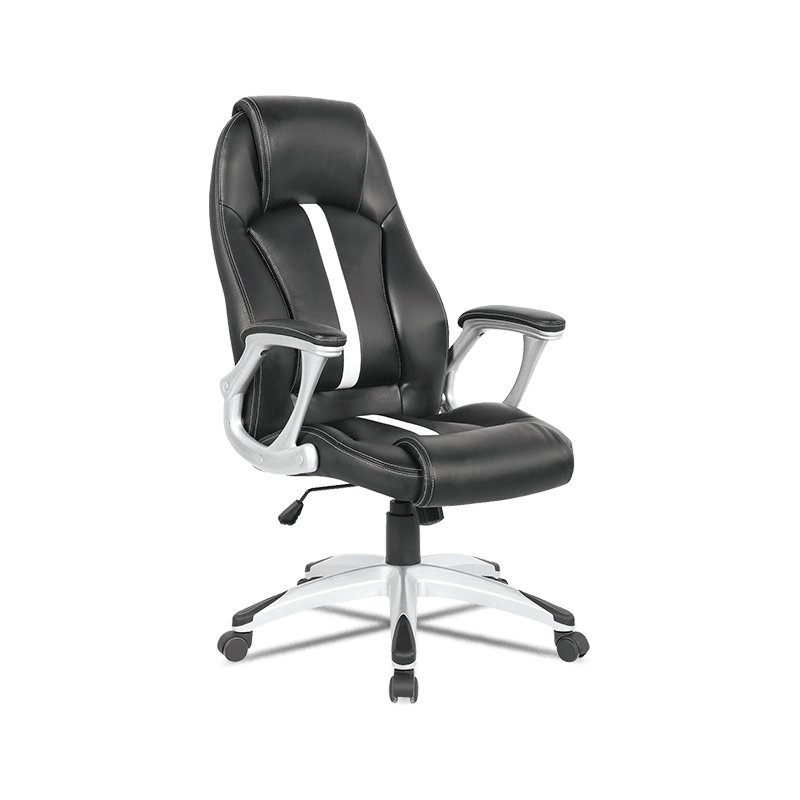 MC-7109 High-Back Executive Office Chair with Lumbar CushionA high-back PU leather executive chair with lumbar support, pneumatic height adjustment and reclining tension control for home or conference use.View Product →
A good chair drifts out of adjustment. Gas lifts creep, casters wear, mesh loosens, and users change shoes or desks. In a commercial setting, add a simple quarterly check: seat height holds under load, casters roll without flat spots, armrests stay locked, and the backrest does not wobble.
Stop adjusting and seek clinical advice if pain is sharp, radiates down the leg, causes numbness, or comes with bleeding, fever, or bowel changes. A chair can reduce mechanical pressure, but it cannot diagnose or treat a medical condition.
Your email address will not be published. Required fields are marked *
Copyright © Anji Mingchuang Furniture Co., Ltd. All Rights Reserved.
