 {|get_lang_name}
 {|get_lang_name}
Product Consultation
Your email address will not be published. Required fields are marked *


Content
When choosing a mesh office chair for daily use, the quality of the mesh material is one of the most important considerations. Mesh is responsible for both breathability and support, so its tension, elasticity, and weave density directly affect sitting comfort over long working hours. High-quality mesh maintains consistent tension, preventing sagging that can lead to poor posture and uneven pressure distribution.
For daily use, mesh should provide firm support while allowing airflow across the back and seat area. This balance helps reduce heat buildup and improves overall sitting comfort during extended periods at a desk.
Ergonomic design plays a central role in how well a mesh office chair supports daily tasks. Key support areas include the lower back, mid-back, and shoulders. A well-designed chair follows the natural curve of the spine and supports an upright working posture without forcing the body into a rigid position.
For office environments where sitting time is prolonged, proper ergonomic alignment helps reduce strain caused by static posture and repetitive movements.
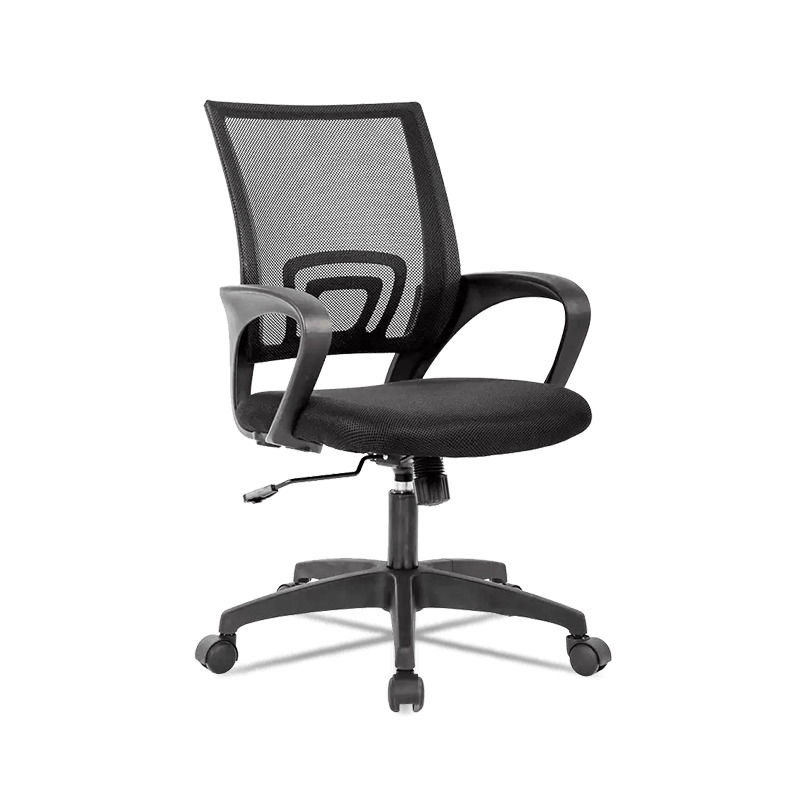
Lumbar support is especially important for daily use. Some mesh office chairs feature adjustable lumbar support, while others rely on shaped mesh tension. Adjustable options allow users to fine-tune support based on individual body shape and sitting habits, which can improve comfort during long work sessions.
The seat area of a mesh office chair should support even weight distribution across the hips and thighs. While mesh backs are common, many chairs combine a mesh back with a cushioned or hybrid seat to balance comfort and stability. Seat depth and width also influence how well the chair supports different body types.
For daily use, a seat that supports the legs without pressing behind the knees helps maintain proper circulation and reduces discomfort during extended sitting.
A mesh office chair intended for daily use should offer practical adjustment options. These commonly include seat height, armrest height, backrest tilt, and tilt tension. Adjustability allows the chair to adapt to different desk heights, working styles, and user preferences.
In shared or flexible workspaces, adjustable features make it easier for multiple users to achieve a comfortable seating position without extensive setup.
Daily use places continuous stress on chair components such as the frame, base, and casters. A reliable mesh office chair should feature a sturdy structure that supports regular movement, leaning, and repositioning throughout the day. The base material and wheel design also influence stability on different floor surfaces.
Durability is especially important in office environments where chairs are used for multiple shifts or extended daily hours.
| Selection Factor | Why It Matters for Daily Use | What to Look For |
| Mesh Quality | Affects breathability and support | Firm tension and durable weave |
| Ergonomic Support | Influences posture and comfort | Lumbar and back contour alignment |
| Adjustability | Supports different users and tasks | Height, tilt, and armrest control |
Selecting a mesh office chair for daily use involves more than appearance or basic comfort. Mesh quality, ergonomic structure, adjustability, and durability all influence how well the chair supports consistent work routines. A chair that aligns with daily usage patterns can help maintain comfort and posture across long hours at a desk.
By focusing on practical features and construction details, it becomes easier to choose a mesh office chair that performs reliably in real working conditions.
Top Executive Office Chairs for Home Offices and Corporate Workspaces
Dec 18,2025Anji Chair Industry: A Highly Influential Industrial Brand in China
Dec 25,2025Your email address will not be published. Required fields are marked *
Copyright © Anji Mingchuang Furniture Co., Ltd. All Rights Reserved.
