 {|get_lang_name}
 {|get_lang_name}
Product Consultation
Your email address will not be published. Required fields are marked *


Content
The term "ergonomic" is applied so broadly in furniture marketing that it has lost much of its meaning for most buyers. In practice, a genuinely ergonomic office chair is one that adapts to the user's body — not one that simply claims to support it. The distinction matters because prolonged sitting in a poorly fitted chair is directly linked to musculoskeletal disorders, with lower back pain alone accounting for an estimated 264 million lost workdays annually in the United States. The chair you spend eight or more hours in each day has a measurable impact on your physical health, cognitive performance, and end-of-day fatigue levels.
A chair earns the ergonomic designation when it provides adjustability across the dimensions that actually vary between individual users: seat height, lumbar support depth and height, armrest positioning, and seat pan depth. These are not luxury features — they are the minimum mechanical requirements for a chair to accommodate the natural curvature of the spine, distribute body weight evenly across the seat surface, and allow the feet to rest flat on the floor with thighs parallel to the ground. Without these adjustments, even an expensive chair forces the user into a fixed posture that may or may not align with their body proportions.
Chair ergonomic office chairs that combine genuine postural support with breathable materials and flexible adjustment mechanisms represent the current standard for productive, health-conscious workspaces — whether at a corporate headquarters or a dedicated home office setup.
Foam and fabric upholstery dominated office seating for decades, but the mesh office chair has become the preferred format for long-duration desk work — and the functional reasons are straightforward. Traditional foam-padded seats trap body heat by blocking airflow entirely beneath and around the user. In a standard office environment, skin surface temperature under a foam seat rises by 2–4°C within the first 30 minutes of sitting. Over a full workday, this thermal buildup contributes to discomfort, fatigue, and reduced concentration.
A high-quality mesh office chair solves this with a woven back and seat panel that allows continuous air circulation across the contact surface. The mesh structure creates thousands of small apertures through which body heat and moisture vapor escape, keeping the microclimate between the user and chair surface noticeably cooler and drier throughout the day. This breathability benefit is not cosmetic — it directly reduces the physical discomfort that causes fidgeting, postural shifts, and the cumulative fatigue associated with static seated postures.
Beyond thermal performance, the structural behavior of a well-engineered mesh back provides passive contouring that foam cannot replicate. High-elasticity mesh deflects under load and distributes pressure across a wider contact area, reducing peak pressure points at the lumbar region, shoulder blades, and sit bones. Strain-resistant mesh that retains its tension after years of repeated deflection is what separates a quality mesh chair from a cheaper alternative that sags and loses support within months of purchase. Skin-friendly surface properties — smooth fiber weave with no abrasive texture — ensure the mesh remains comfortable even through direct skin contact in warm weather when sleeves are rolled up or legs are exposed.
An adjustable office chair is only as useful as the adjustments it offers. Many chairs marketed as adjustable provide only seat height variation — a single lever controlling pneumatic cylinder extension. While seat height is the most critical single adjustment (it determines whether your feet can rest flat and whether your elbows align with the desk surface), a chair that stops there falls short of genuine ergonomic function. The adjustments that meaningfully improve postural alignment and reduce musculoskeletal load are listed below, ranked by impact:
Armrest ergonomics in particular are frequently underestimated. The armrests of a well-designed ergonomic office chair support the arms' position with lateral stability — preventing the shoulders from internally rotating and the neck from compensating with lateral flexion. For users who type extensively, properly positioned armrests reduce forearm muscle activation by allowing the weight of the arms to rest rather than be held up by shoulder and neck musculature throughout the workday.
The ergonomic quality of a chair's back and seat adjustments is undermined if the structural base cannot support stable, long-term daily use. Two components that buyers frequently overlook during purchase — the base material and the caster wheels — have a direct effect on both safety and floor preservation.
A heavy-duty nylon base provides the optimal balance of strength and weight for office chair applications. Nylon's impact resistance and flexibility under dynamic load — when a user leans, shifts, or drops into the chair — prevents the brittle fracture behavior seen in cheaper polypropylene bases. A five-star base distributes the user's weight across five contact points, minimizing tipping risk. Weight capacity specifications matter as a real safety parameter: a chair rated to 250 lbs should carry that load through thousands of daily sit-and-rise cycles without degradation of the cylinder, base, or backrest mounting hardware.
Standard office chair casters measure 2 inches in diameter. Wider wheels — at 2 inches or larger — distribute rolling load over a greater contact patch, which reduces the pressure per unit area applied to hard floors and prevents the indentation and scratching that narrower casters cause in hardwood, vinyl plank, and laminate surfaces. Scratch-free caster materials, typically polyurethane over a nylon core, roll smoothly across hard floors and low-pile carpet without resistance, making repositioning effortless and eliminating the scraping sound associated with cheaper plastic wheels.
When evaluating chair ergonomic office chairs side by side, a structured comparison of core specifications prevents the common mistake of selecting based on price or appearance alone. The table below outlines the critical specification categories and what constitutes an adequate versus premium standard for each:
| Specification | Minimum Acceptable | Better Standard |
|---|---|---|
| Seat height range | 16–20 inches | 16–21+ inches |
| Weight capacity | 200 lbs | 250–300 lbs |
| Lumbar support | Fixed position | Height + depth adjustable |
| Armrest adjustment | Height only | Height + width + pivot |
| Mesh back tension | Single fixed tension | Adjustable recline resistance |
| Caster type | Hard plastic, 1.5-inch | Polyurethane, 2-inch, scratch-free |
| Base material | Polypropylene | Heavy-duty nylon or aluminum |
Assembly ease is also a practical consideration that is rarely highlighted in product specifications but significantly affects the out-of-box experience. A well-designed adjustable office chair should assemble in under 20 minutes with basic hand tools, with clearly labeled components and hardware that aligns without forcing. Chairs that require two people to assemble or include ambiguous instructions create frustration before the user has even sat down — a poor introduction to a product intended to improve daily comfort.
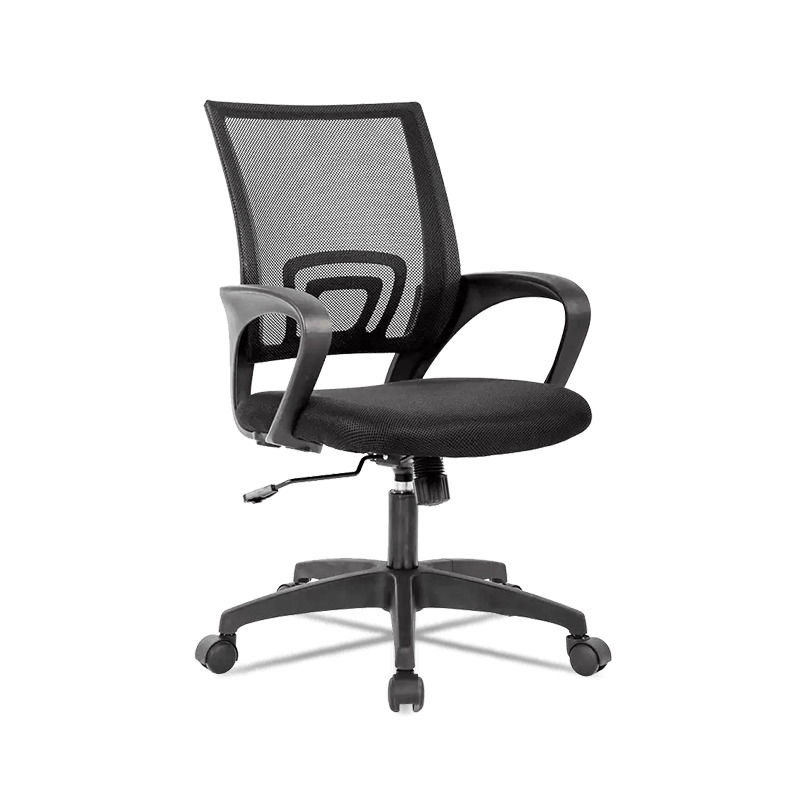
For buyers equipping a home office or outfitting multiple workstations in a commercial setting, the combination of a breathable mesh office chair with a full-range adjustable office chair mechanism, durable nylon base, and scratch-resistant casters represents the most defensible balance of ergonomic function, material longevity, and value. These are not competing priorities — the right chair delivers all three simultaneously, and the specifications above provide a reliable framework for identifying which products actually meet that standard.
Gaming Chair for Home or Office: Full Guide
Apr 29,2026Ergonomic Faux Leather Gaming Chair Guide
May 13,2026Your email address will not be published. Required fields are marked *
Copyright © Anji Mingchuang Furniture Co., Ltd. All Rights Reserved.
