 {|get_lang_name}
 {|get_lang_name}
Product Consultation
Your email address will not be published. Required fields are marked *


Content
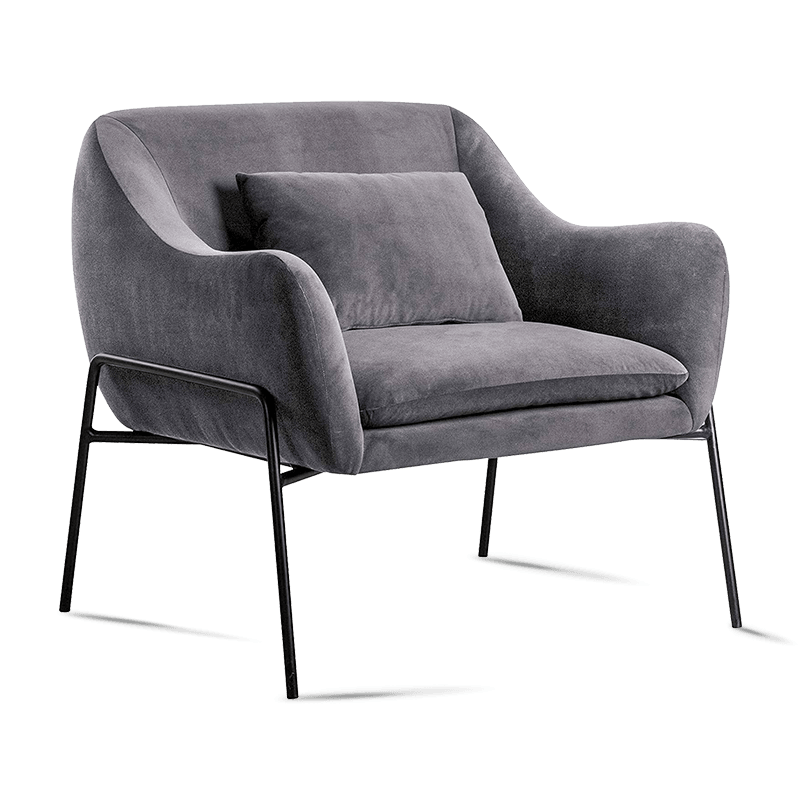
An accent chair is more than just extra seating — it's a deliberate design statement. Unlike standard sofas or matching chair sets, an accent chair is selected specifically to contrast with or complement the surrounding décor. Its purpose is dual: functional seating and visual focal point. A living room armchair, on the other hand, leans more toward everyday comfort and practicality, though the two categories increasingly overlap in modern interior design.
The defining feature of a great accent chair is that nonchalant kind of confidence it brings to a room — it doesn't try too hard, yet it's impossible to ignore. Whether upholstered in a bold pattern, finished in a contrasting color, or shaped with a distinctive silhouette, it anchors a space without overwhelming it. This is why mid-century-inspired frames remain so popular: clean lines, tapered legs, and architectural structure give the chair personality without demanding the spotlight.
From a structural standpoint, the best accent chairs combine a sturdy frame — typically solid hardwood or engineered wood — with soft-but-firm cushioning that holds its shape over years of use. The seat density matters more than most buyers realize; a cushion that's too soft will sag within months, while one that's too firm feels uninviting. A well-balanced cushion offers support without rigidity, making the chair equally suitable for a quick read or a long conversation.
Upholstery is where an accent chair truly becomes personal. The fabric you choose shapes not only the look but also how the chair feels, how easily it cleans, and how long it lasts in a high-traffic living room setting. Most manufacturers offer a range of options — from performance velvet and linen blends to full-grain leather and bouclé — each with its own maintenance profile and aesthetic character.
Below is a practical comparison of the most common upholstery fabrics used for living room armchairs:
| Fabric Type | Durability | Feel | Best For |
|---|---|---|---|
| Performance Velvet | High | Luxurious, soft | Formal living rooms, bedrooms |
| Linen Blend | Medium | Breathable, relaxed | Casual, Scandinavian-style spaces |
| Bouclé | Medium | Textured, cozy | Contemporary, minimalist rooms |
| Full-Grain Leather | Very High | Firm, refined | Traditional, industrial, modern spaces |
| Microfiber | High | Smooth, easy-clean | Families with children or pets |
If you're placing the chair in a bedroom or low-traffic reading corner, a more delicate fabric like linen or bouclé works beautifully. For a central living room armchair that sees daily use, opt for performance fabrics rated above 30,000 double rubs on the Wyzenbeek scale — a standard industry benchmark for abrasion resistance.
One of the greatest strengths of the accent chair is its versatility. This chair fits perfectly in pretty much any setting — and that's not marketing language, it's a genuine design truth. The same chair that commands attention in a living room can quietly anchor a bedroom corner or create a cozy nook in a home office. Here's how to place it effectively across the most common settings:
Position the accent chair at a 45-degree angle to your sofa to encourage conversation flow. Avoid pushing it flush against the wall — floating it slightly into the room makes the space feel curated rather than cramped. Pair it with a small side table and a floor lamp to create a self-contained reading area within the larger living room layout. A living room armchair in a contrasting color or pattern to your sofa adds visual rhythm without clashing.
A bedroom accent chair placed near a window transforms an underused corner into a personal retreat. Choose a fabric that matches or complements your bedding — neutral linen coordinates easily, while a jewel-toned velvet creates a luxurious contrast against soft bedding tones. The chair doesn't need to match your bedroom furniture exactly; slight intentional contrast is what gives it its accent quality.
For a dedicated reading chair, prioritize seat depth and back height. A deeper seat allows you to curl your legs up comfortably, while a higher back provides neck support during extended sessions. The mid-century-inspired frame common to many accent chair designs offers excellent lumbar curvature, making it a surprisingly ergonomic choice for long reading periods compared to overstuffed lounge chairs that lack lower back definition.
Sizing is where many accent chair purchases go wrong. A chair that looks perfectly proportioned online can overwhelm a small living room or disappear in a large open-plan space. Before purchasing any living room armchair, measure these four dimensions against your room's layout:
Using painter's tape on your floor to outline the chair's footprint before ordering is a simple but highly effective way to test whether the scale feels right in your actual space.
The mid-century-inspired accent chair is among the most adaptable designs in residential furniture — precisely because its proportions and lines are borrowed from a period that valued restraint and craft equally. Here's how it integrates across the most popular interior styles:
Whether you're dressing up a bedroom, adding supplemental seating to a living room, or simply searching for a good-looking and comfortable reading chair, the accent chair rewards careful selection. Invest in a sturdy frame, choose your upholstery with both aesthetics and practicality in mind, and place it with intentionality — and it will be one of the most-used, most-admired pieces in your home for years to come.
Best Office Chairs for Hip Pain, Sciatica, Fibromyalgia & Heavy Use
Mar 23,2026What Makes an Executive Office Chair Actually Good for Your Back?
Apr 10,2026Your email address will not be published. Required fields are marked *

Copyright © Anji Mingchuang Furniture Co., Ltd. All Rights Reserved.
