 {|get_lang_name}
 {|get_lang_name}
Product Consultation
Your email address will not be published. Required fields are marked *


Most home offices were not designed with rest in mind. A desk, a task chair, a monitor—and when the workday ends or you need a break, nowhere comfortable to sit that isn't another room entirely. For anyone working from a studio, a one-bedroom apartment, or a dedicated room under 150 square feet, a manual single recliner sofa fills that gap in a way a full sofa simply cannot.
This guide covers why a single recliner makes sense for compact home office spaces, how to choose between manual and power mechanisms, what to measure before buying, and what fabric and foam performance actually looks like in daily use.
Content
A three-seat sofa in a home office is almost always the wrong piece of furniture. It dominates the floor plan, leaves little room for a desk and bookshelf, and sits largely unused—most home office occupants are alone. A single recliner sofa occupies a fraction of the footprint while delivering the one function the space actually needs: a place to decompress between work sessions.
The use pattern is different from a living room sofa, too. In a home office, a recliner is not for long evenings of passive TV watching. It serves shorter, more purposeful moments: a 20-minute reading break with a physical document or book, a focused thinking session away from the screen, a brief rest before returning to a deadline. These shorter intervals don't require a large, deep sofa. They require a chair-sized piece with a backrest that adjusts and a footrest that deploys quickly.
Single recliners also handle multi-use rooms better than sofas. When the home office doubles as a guest room or reading nook, a compact recliner can be repositioned against a wall or angled toward a window without rearranging the entire room. A sofa offers no such flexibility.
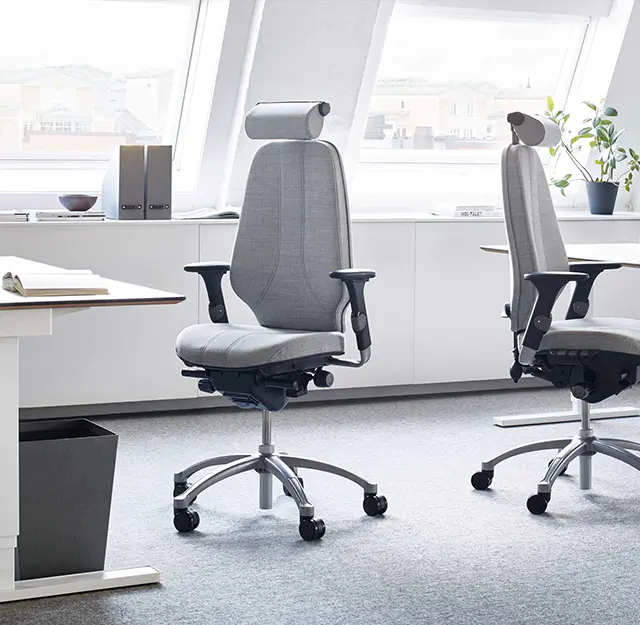
For office-adjacent seating that transitions cleanly from task support to relaxation, single-seat recliner sofas designed for home and office use are the most space-efficient solution. If your primary need is seated desk work rather than reclined rest, home office chairs built for focused work sessions address a different part of that equation.
The choice between manual and power reclining is often presented as a comfort question. In compact spaces, it is actually a layout question.
Power recliners require a nearby outlet. In a small home office where every wall is occupied by a desk, shelving, or a door, routing a power cord from a recliner to an accessible socket without creating a tripping hazard is a real constraint. Power mechanisms also mean the chair must maintain a fixed relationship to the outlet—limiting where in the room it can be placed.
Manual recliners carry no such constraint. They can be placed anywhere in the room, moved seasonally, or repositioned without touching an extension cord. The lever or push-back mechanism is instantaneous—no button hold, no motor delay. For the short-duration rest breaks that characterize home office use, that immediacy is a practical advantage.
| Factor | Manual Recliner | Power Recliner |
|---|---|---|
| Placement flexibility | Anywhere in the room | Must be near an outlet |
| Operation speed | Instant lever or push-back | Motor-dependent, slight delay |
| Cable management | None required | Power cord routing needed |
| Maintenance risk | Mechanical only, low failure rate | Motor and wiring components |
| Unit cost | Lower | Higher |
| Best suited for | Small rooms, flexible layouts, short rest breaks | Dedicated media rooms, long sessions, accessibility needs |
For most small home office setups, the manual mechanism wins on every practical criterion. The power option earns its premium in scenarios where precise reclining angles matter across extended sessions—which is rarely the home office use case.
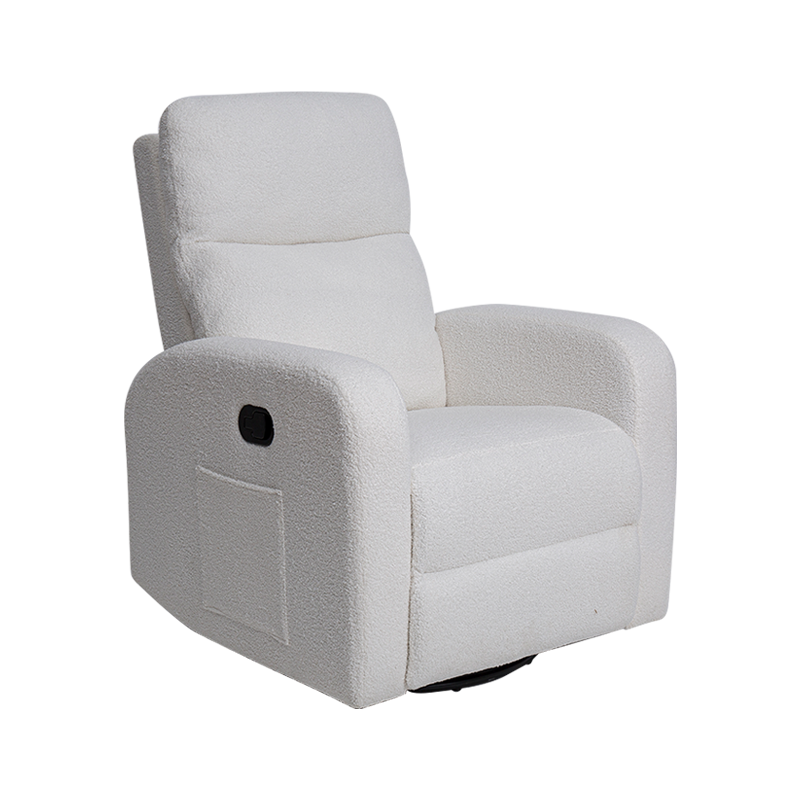
Recliner dimensions in product listings describe the chair in its upright position. What matters for a small room is the fully reclined footprint—and that number is almost never prominently listed. Here is a three-step measurement process that prevents the most common sizing mistakes.
For rooms with awkward proportions or limited floor space, leisure chairs scaled for compact living spaces offer alternative profiles when a traditional recliner frame is too deep. Compressed sofas sized for small rooms are another format worth comparing when the room needs occasional two-person seating without committing to a full sofa footprint.
Fabric upholstery gets selected for practical reasons in a home office context: it is cooler against bare skin during summer work-from-home months, less prone to showing scuff marks from shoes, and easier to maintain without specialist products. The tradeoff versus bonded leather or faux leather is surface texture—fabric shows lint and light pet hair more readily—but for a space used primarily by one person, that is a manageable drawback.
Woven polyester and blended fabric covers in the 280–320 gsm range offer the best durability-to-breathability ratio for desk-adjacent seating. Avoid covers below 200 gsm in a home office setting; lighter fabrics pill and thin faster under the daily on-off cycle of someone who sits down multiple times per workday.
Standard foam filling—typically 1.5–1.8 lb density polyurethane—is appropriate for home office recliner use when sessions are measured in 20–45 minute increments rather than multi-hour lounging. At these durations, standard foam maintains its profile without significant compression fatigue. For extended daily use exceeding two hours of continuous reclining, higher-density foam (1.8–2.2 lb) provides noticeably better long-term support and resists body-shaped impressions forming in the seat cushion.
Maintenance is straightforward: vacuum the seat and back surfaces weekly to prevent dust embedding in the weave, and treat spills immediately with a damp cloth rather than rubbing. Most commercial fabric recliners accept standard upholstery cleaning sprays without affecting the foam below, provided the cover is not saturated.
Before placing an order—retail or wholesale—run through this checklist. It covers the variables that most commonly cause buyer regret in compact-space recliner purchases.
Anji Mingchuang Furniture Co., Ltd. manufactures single recliner sofas and compact seating across fabric, faux leather, and blended upholstery options, with manual and standard configurations suited to home office, residential, and light commercial applications. Custom sizing, fabric selection, and carton specifications are available for wholesale orders. Contact our team to request product specifications or a factory quotation for your project.
Adjustable Height Office Lounge Chair with Padded Armrest | Comfort & Ergonomics
Jun 03,2026Durability of Leisure Chairs: Best Materials Guide
Jun 15,2026Your email address will not be published. Required fields are marked *
Copyright © Anji Mingchuang Furniture Co., Ltd. All Rights Reserved.
