

The gaming chair is designed for gamers. Its thick sponges and high-quality air rod provide stability and comfort for you. The gaming chair rack is ergonomically designed. The seat height, armrest direction, and back tilt are adjustable, so you can adjust it in your satisfied position and enjoy better playing, reading and resting time. The gaming chair's five rolling wheels at the bottom ensure 360-degree rotation and smooth movement in all directions. Meanwhile, this gaming chair is equipped with a headrest and a lumbar cushion. It can support your waist and effectively reduce the fatigue so that players will keep a great state in the game for a long time.
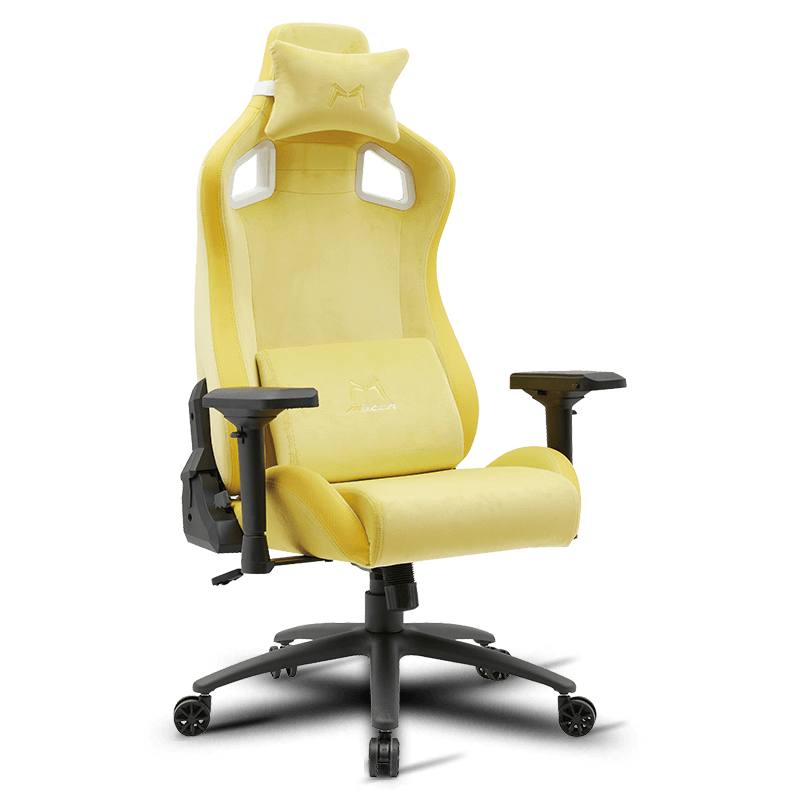
The gaming chair is designed for gamers. Its thick sponges and hi...
.png "MC-6641B Ergonomic Gaming Chair with Retractable Footrest, 135° Reclining, Faux Leather")
The gaming chair is designed for gamers. Its thick sponges and hi...
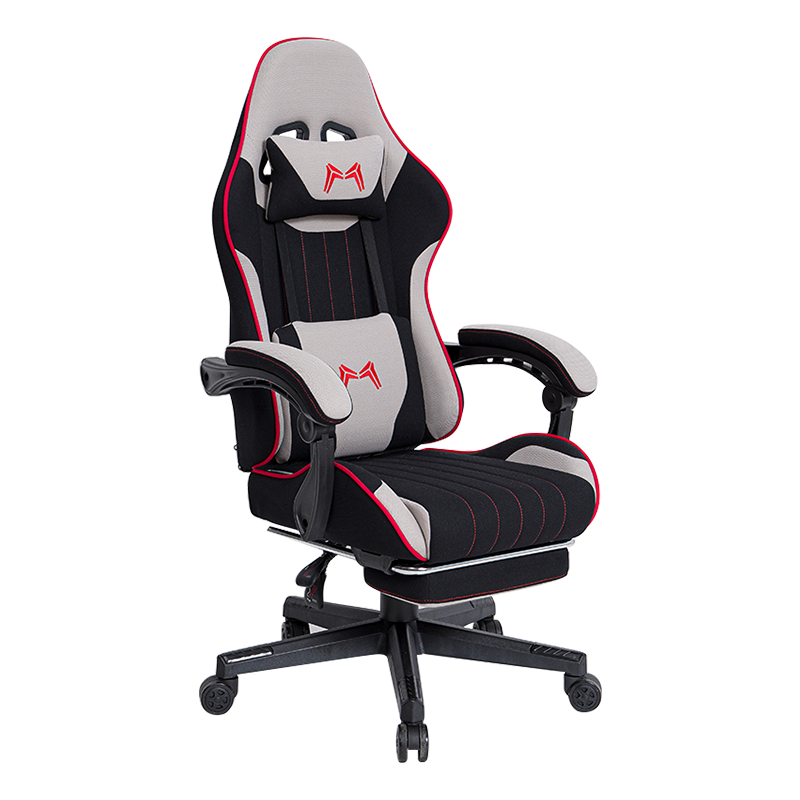
The gaming chair is designed for gamers. Its thick sponges and hi...
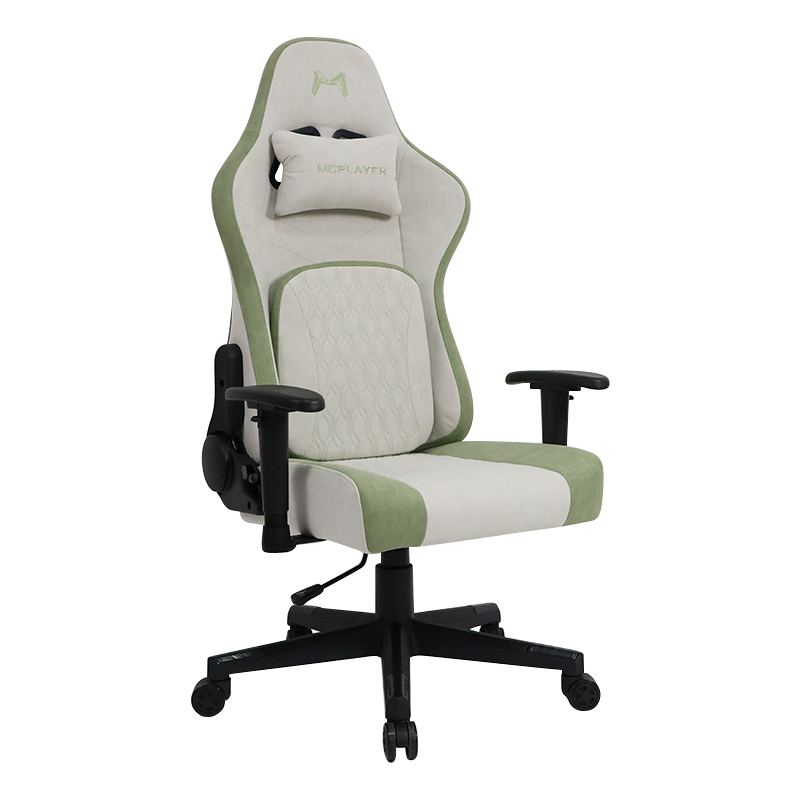
The gaming chair is designed for gamers. Its thick sponges and hi...
Anji Mingchuang Furniture Co., Ltd. is a research and development, production, sales in the integration of manufacturing company, through professional human body engineering and the research of furniture culture, create a classic design, and guide the home culture. As professional China Gaming chair Manufacturers and Wholesale Ergonomic Gaming Chair Factory, we offer Wholesale Gaming chair for sale online.
Company's products include gaming chair, office chair, dining chair, possess a complete series of office and restaurant series, the company has high-quality raw materials and selected; Keep improving technology company, with its unique design style, exquisite technology, sincere service, win the favor of customers, the original design of products and become the industry leader.

Video
Industry Knowledge
In an ergonomic gaming chair with footrest, the footrest is not an accessory but a structural extension of the sitting system. From an engineering standpoint, the footrest must share load paths with the seat base rather than relying solely on slide rails. A well-designed system distributes leg weight back into the chair’s steel frame, reducing stress concentration and long-term deformation.
For B2B buyers, a critical indicator is the dynamic load-bearing rating rather than static claims. Footrests designed for prolonged recline angles (135°–165°) require reinforced hinge points and thicker wall tubing to avoid fatigue failure during repeated extension cycles. In our own R&D process, we have found that optimizing this linkage significantly extends service life in high-frequency usage environments such as esports venues.
Advanced ergonomic gaming chairs segment the backrest into functional zones rather than relying on uniform foam density. Thoracic support, lumbar support, and shoulder containment are tuned separately to accommodate prolonged seated postures common in gaming and intensive workstation scenarios.
From a manufacturing perspective, achieving this zoning requires precise foam molding and fabric tension control. This is an area where our design team invests heavily, because subtle differences in pressure mapping directly influence end-user fatigue levels.
High-density foam alone does not guarantee ergonomic performance. The key metric for B2B procurement is compression set recovery, which reflects how well the foam rebounds after long-term loading. Chairs deployed in commercial or institutional settings often fail prematurely due to foam collapse rather than frame damage.
| Foam Type | Density Range | Typical Use Case |
|---|---|---|
| Cold-cure molded foam | 50–65 kg/m³ | Long-duration professional seating |
| Cut polyurethane foam | 30–45 kg/m³ | Entry-level or decorative seating |
In our production line, balancing tactile softness with structural resilience is a recurring design challenge, especially for gaming chairs with footrests that encourage extended recline.
Recline mechanisms in ergonomic gaming chairs experience compounded stress when paired with a footrest. Each recline action introduces torque not only to the tilt mechanism but also to the seat slider and footrest linkage. For B2B buyers, requesting cycle test data (e.g., 100,000+ recline cycles) provides a more accurate durability benchmark than warranty length alone.
Manufacturing best practice includes preloading tests that simulate uneven user movement rather than idealized vertical loads. We apply this approach internally to ensure chairs perform consistently in real-world, high-usage scenarios.
Gaming chairs with integrated footrests introduce unique challenges in packaging and container optimization. Foldable or telescopic footrest designs can reduce carton volume, but only if the mechanism tolerates repeated assembly without play or noise development.
From our perspective as a manufacturer integrating R&D and production, aligning ergonomic design with logistical efficiency is often what determines a product’s true competitiveness in the B2B market.
 {|get_lang_name}
 {|get_lang_name}